
 Français
 English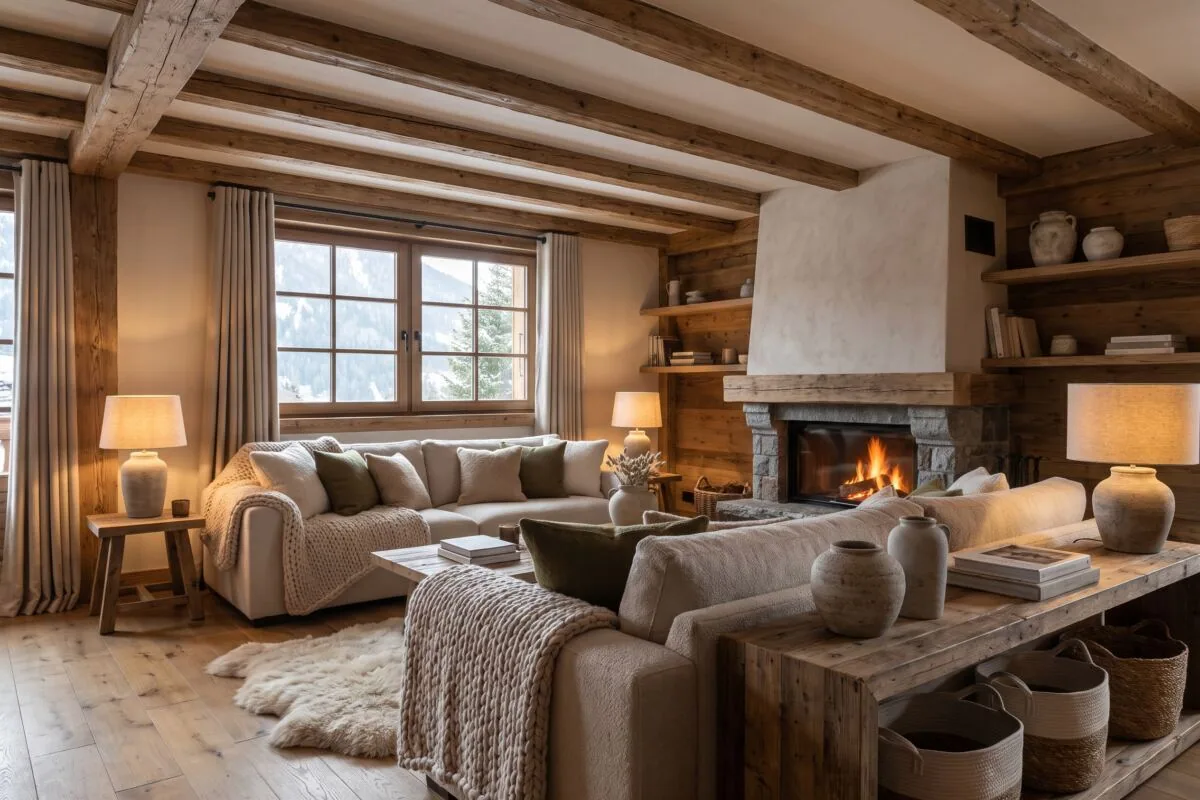
6 min read
A well-prepared chalet rents more easily, photographs better, and generates far fewer maintenance call-outs mid-season. Here’s what actually makes the difference for guests staying several weeks at a time, in winter or summer — not a generic list of tips that could apply to any holiday let anywhere.
In short
- Three non-negotiables: reliable heating, wifi that can actually handle the load, and fire safety that meets French requirements (smoke detector).
- Comfort on a long stay comes down to the kitchen, the linens, and the storage — not the decor.
- A properly planned boot and ski area changes the winter guest experience more than almost anything else.
- Good photos start with good preparation, not the other way around.
The non-negotiable essentials
Before you think about styling, a chalet let by the season has to deliver on the basics first. These are the things guests forgive least, and the ones that generate the most mid-stay phone calls if they’re not sorted out in advance.
- Heating that actually works. Winter in Megève doesn’t forgive a poorly heated chalet. Test every radiator or heating zone before the season opens, not just when a booking comes in. Simple, clearly labelled thermostats with instructions in French and English prevent late-night phone calls and confused guests.
- Wifi that can genuinely handle the load. Several guests working remotely, streaming, or on video calls at once, often in a multi-level chalet with thick stone or timber walls. A fibre connection paired with one or two mesh extenders, and the password clearly displayed somewhere in the property, solves most of the frustration before it starts.
- Fire safety that meets French requirements. French law has required at least one smoke alarm (DAAF) in every home since 2015. For a furnished or seasonal rental — unlike a standard unfurnished lease — it’s the owner, not the guest, who stays responsible for maintaining and replacing the detector throughout the letting period. Add an easily accessible fire extinguisher and, if the chalet has a fireplace or wood stove, a carbon monoxide detector: this isn’t just good practice, it’s what a serious guest expects from a professionally managed property.
Comfort for a stay that lasts
A weekend forgives a lot that a two, three, or six-week stay doesn’t. Megève’s seasonal guests — families, groups of friends, remote workers settling in for a winter or a summer — actually live in the property, they don’t just sleep in it.
- A kitchen equipped to cook in, not just to photograph. Enough hob space, a working oven, a full set of proper cookware, knives that actually cut, a dishwasher, and enough crockery for everyone to eat at once without washing up between courses. A cupboard with the basics — salt, oil, coffee, tea, staples — is a small touch that’s genuinely appreciated on a late arrival.
- Enough linen to actually last. At least two sets of sheets and towels per bed and bathroom, so guests can refresh mid-stay without relying on a mid-stay cleaning visit. Bigger, thicker bath towels than you’d provide for a short city-break stand out, especially after a day of skiing or hiking.
- Real storage. Enough wardrobe and drawer space for a long-stay guest’s luggage, not a weekender’s, plus somewhere dedicated for bulky items — empty suitcases, sports bags, winter or summer equipment.
- A washing machine — and ideally a dryer. Over several weeks, this is almost a selection criterion in its own right, particularly for families.
Think alpine, not just furnished
This is usually what separates a chalet genuinely designed for Megève from a generic furnished let painted in alpine colours. Your guests’ profile — multi-season, often families, here for the mountain as much as for the rest — comes with specific needs.
- A real boot and ski area. A dedicated space, ideally heated or ventilated, for drying ski boots and technical clothing without taking over the entryway or bathroom. Boot dryers are a small investment that genuinely changes a family’s winter experience.
- An entryway built for snow and mud. A wide doormat, room to take off boots and shoes, enough hooks for technical jackets — a guest’s first impression is often set in the thirty seconds after they walk through the door.
- A real welcome book. Not just how the oven works, but useful local information — market days, useful numbers, how the ski pass or shuttle works, where to rent equipment, one or two trusted places to eat. It’s one of the cheapest things to put together and one of the most reassuring for a guest discovering Megève for the first time.
- Something for both seasons. Extra blankets and hot water bottles in winter, a fan and hiking information in summer — a chalet let year-round needs to work for both faces of the property.
A property that shows — and books — well
Preparation isn’t only about what your guests experience once they’re there: it also shapes what future guests see before they book. A tidy, decluttered, well-lit chalet photographs better — and a property that photographs well converts better, simply because the listing honestly reflects what a guest will find on arrival.
A few simple principles before a photo shoot: clear each room of personal items and clutter, open the curtains for natural light, keep cables and internet boxes out of frame, and present the property exactly as it will actually be let — not staged in a way that misleads. An honest listing that matches exactly what a guest finds on arrival reduces disappointment, and therefore poor reviews, far more effectively than styling that doesn’t match reality.
Getting this right without doing it all yourself
Pulling all of this together — reliable heating, robust wifi, compliant safety equipment, enough linen, a properly planned ski area, an up-to-date welcome book, honest photography — is real work, especially from a distance or alongside a full-time job. This is exactly where professional property management earns its keep: knowing which priorities genuinely matter to a guest, as opposed to purely decorative details, coordinating the right local suppliers, and making sure none of the above gets left to chance between stays.
At Ascent Megève, this preparation is built into how we support owners — you can see in detail what our seasonal property management actually includes to understand how we take this off your plate, without you having to manage it all yourself.
Property ready to let: what next?
Own a property in Megève or a neighbouring village? Get a free, no-obligation estimate of what it could earn as a rental, then let’s talk about the arrangement that suits you.
Sources
The legal smoke-detector requirement cited in this article comes from the following source, consulted in August 2026: